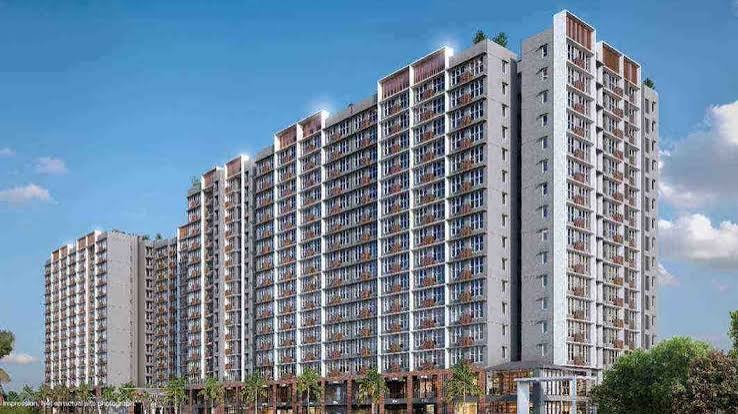
Bangalore continues to be one of India's most closely watched real estate markets, and understanding the city-wide picture helps put any specific project — including Godrej Sarjapur — in context.
Why Bangalore's Market Keeps Growing
The city's real estate demand is driven overwhelmingly by its IT and tech sector. As companies expand and professionals relocate for work, housing demand follows — and this has kept Bangalore's market comparatively resilient even as other cities have seen more uneven cycles.
Key Residential Hubs and Emerging Micro-Markets
East Bangalore has emerged as one of the city's most active growth corridors, largely due to its proximity to IT hubs like Whitefield's ITPL and EPIP Zone, Bagmane Tech Park, and the broader Outer Ring Road belt. Within this, Sarjapur Road specifically continues to be flagged by multiple market analysts as one of the corridors expected to lead price appreciation in the coming years, thanks to its mix of established social infrastructure and continued IT-driven demand.
Connectivity Advantages
Bangalore's road network, BMTC bus system, and expanding metro lines (with Phase 2 and 2A extensions actively under construction) continue to open up new corridors to faster commutes. Analysts specifically point to metro-adjacent zones as seeing outsized demand growth compared to the broader market — a trend worth watching as Bangalore's metro network expands further.
Social Infrastructure and Lifestyle
Bangalore's established social infrastructure — reputed schools, well-known malls like Phoenix Marketcity and Orion Mall, and hospitals such as Manipal and Fortis — continues to support end-user demand, not just investment interest. This matters because analysts generally agree Bangalore's growth is largely end-user-led rather than purely speculative, which tends to support more stable, sustainable price growth over time.
Investment Potential: What the Data Shows
Current market estimates vary depending on the source and segment, but a reasonable consensus across multiple 2026 analyst reports points to:
- Annual price appreciation broadly in the 6–12% range, with premium and luxury segments often at the higher end of that band
- Prime IT-corridor prices commonly cited in the ₹15,000–18,000 per sq. ft. range, while more affordable pockets (including parts of West Bangalore) sit closer to ₹5,000–9,000 per sq. ft.
- Some luxury-segment reports point to appreciation as high as 8-10%, reflecting stronger demand at the premium end of the market
These are city-wide averages — any specific project's actual appreciation depends heavily on its exact micro-location, builder reputation, and timing of purchase. See our Resale Value guide for how this plays out for a specific project like Godrej Sarjapur.
Rental Yield Analysis
Rental yields across Bangalore also show a fairly wide range depending on segment and locality — generally somewhere between 2% and 6% annually, with IT-heavy corridors and mid-segment housing often landing in the middle of that range, and premium/luxury segments sometimes trending lower as a percentage (even if absolute rent is higher). See our Rental Yield guide for what this looks like specifically for the Sarjapur Road corridor.
Before treating any project's growth story as settled, confirm its registration on the Karnataka RERA portal and look at project-specific factors rather than city-wide numbers in isolation.
FAQs
Multiple analyst sources continue to view Bangalore favorably for 2026, citing sustained IT-driven demand, infrastructure expansion, and largely end-user-led growth — though appreciation rates vary meaningfully by locality and segment.
Primarily continued expansion of the IT and tech sector, migration for jobs, and infrastructure upgrades including metro expansion and ring-road projects.
Several analysts point to Sarjapur Road, North Bangalore, and metro-adjacent zones as strong appreciation candidates for the coming years.
Broadly in the 2–6% annual range, varying by locality and segment — IT-heavy corridors and mid-segment housing often perform better on this metric than ultra-premium segments.
No — city and corridor-level trends are useful context, but a specific project's performance also depends on its exact location, builder track record, and how well it's maintained over time.
Ready to See How a Specific Project Fits This Picture?
Get a detailed look at how Godrej Sarjapur specifically fits within this broader Bangalore growth story.